06 Aug 2025
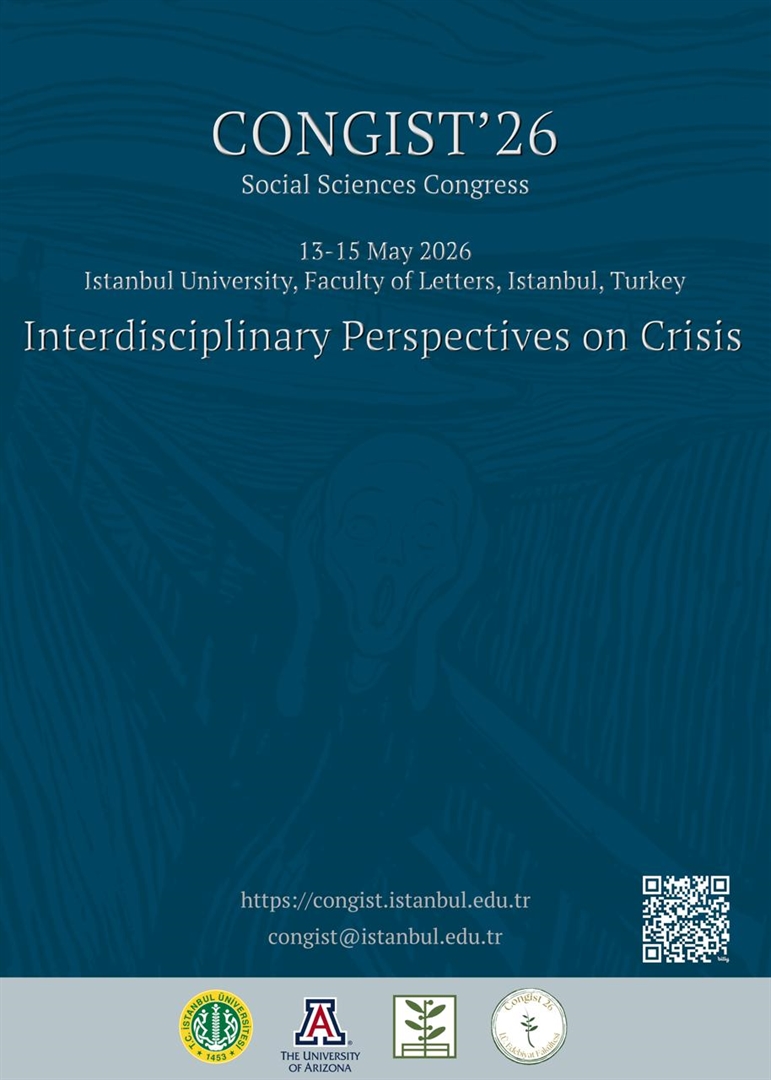
CONGIST’26
Interdisciplinary Perspectives on Crisis
Date: 13-15 May 2026
Venue: Istanbul University, Faculty of Letters, Istanbul, Turkey
In the context of social sciences, crisis is broadly defined as a period of severe disruption or instability that challenges established structures, norms, or systems within societies. Crises can manifest in various forms—economic collapses, political upheavals, environmental disasters, technological shifts, wars, pandemics, climate or cultural conflicts. Historically, crises have always triggered societal change, which necessitate adaptation, reorganization, and innovation within communities. Throughout history, the impact of crises has been profound, shaping the trajectories of societies by prompting adaptation and transformation. Societies that fail to address crises effectively often face decline, while those that develop robust strategies can recover and evolve. Understanding crises within an interdisciplinary framework helps to reveal patterns, inform policies, and foster resilience in the face of contemporary and future challenges.
This international congress aims to explore the dynamics of crises from interdisciplinary perspectives. Potential themes for papers and panels include, but are not limited to:
- Cultural Crises and Sustainability
- Representations of Crises and Sustainability in Media, Cinema, and Art
- The Crisis of Art Criticism
- Aesthetic Reflections of the Crisis
- Crisis in Performing Arts
- Crisis, Sustainability, and Misinformation
- Social Crises and Transformation: Sociological and Psychological Approaches
- Information and Records Management in Times of Crisis: Digitalization, Archiving, and Sustainability
- Eco-Communication in Crises
- Crisis and Ethics
- War, Crisis, and Sustainability: The Impact of Conflict on Societal Continuity
- Sustainability and Resilience in Historical and Archaeological Perspectives
- Utopian and Dystopian Visions of Crisis and Sustainability
- Geographical Approaches to Environmental Crises and Sustainable Solutions
- Philosophical Reflections on the Relationship Between Crisis and Sustainability
- Crises and Sustainability in the Ancient World
- Anthropological Perspectives on the Social and Cultural Impact of Crises
- The Language of Crisis: Linguistic Perspectives
- Eco-Linguistics and Sustainability
- The Role of Discourse in Shaping Collective Action about Crisis and Sustainability
- Discourse(s) of Crisis
- Semiotics of Crisis
- Multimodal Communication in Crisis Situations: Ecolinguistic and Ecosemiotic Perspectives
- Ecocriticism, Ecofeminism, and the Climate Crisis: Literary Representations of Sustainability
- Apocalyptic and Post-Apocalyptic Fiction: Crisis, Survival, and Sustainable Futures
- Literary Depictions of Resource Scarcity and Environmental Collapse
- The Evolution of Crisis-Related Vocabulary: Historical and Contemporary Linguistic Trends
- Narratives of Crisis and Sustainability: Literary Responses to Environmental and Social Challenges
- Historical Perspectives on Crisis and Recovery
- The Psychological Impacts of Crises
- Eco-translation and Climate Crisis
- Disaster and Crisis Interpreting
- Crisis in Logic
- Episteme and Crisis
- Phenomenology of Crisis
- Postmodernity and Crisis
- Ontology and Crisis
- Identity construction and Crisis
- Language and Signs of Crisis
- The Role of Globalisation in Triggering and Resolving Crises
- Local Effects of Global Crises
- Preparation for Future Crises in the Light of Historical Analyses
- Sustainable Development and Crisis Prevention Policies
- Income Inequality, Class Conflicts and Crises
- The Search For Social Justice and Crisis Management
- Wars, Famines, And Waves of Migration
- The Effects of Refugee Crises on International Politics
- Geographical Dimensions of the Climate Crisis
- Natural Disasters and Social Vulnerability
- Resource Crises and Geopolitical Tensions
- Urbanization and Ecological Crisis
- Digital Crises and Social Interaction
- Social Impacts of Crises
- Post-Crisis Psychological Transformation,
- Resilience, and Adaptation Processes
- Psychological Impacts of Crises
Congress Languages: English and Turkish
PUBLICATION OPPORTUNITIES
ABSTRACTS
Abstracts of the papers presented at the conference will be published in the book of abstracts with ISBN.
FULL TEXTS
Option 1: Selected papers presented at the congress will be considered for publication in peer-reviewed edited volumes of the Congist Book Series by IU-Press. IU-Press is indexed in the Web of Science Book Citation Index (BKCI).
Option 2: Selected papers presented at the congress will be considered for publication in special issues of international peer-reviewed journals published by IU-Press, which are indexed in the Web of Science Emerging Sources Citation Index (ESCI) and Elsevier Scopus.
Submission of the Abstracts: Please submit your paper proposals (max. 1 DIN-A-Size, Times New Roman 12 point type, 2000 characters including spaces) online at from here.
Congist’24
Social Sciences and Artificial Intelligence: Theory and Practice
Date: December 18-20, 2024
Location: Istanbul University Faculty of Letters
Organizers:
Istanbul University Faculty of Letters
Erasmus University Rotterdam School of Philosophy (Scientific Partner Institution)
- The congress will feature presentations of esteemed speakers renowned in AI and the social sciences, covering current debates, practices, and theoretical frameworks regarding the relationship between AI technologies and the social sciences.
- There will be sessions open to suggestions for panel discussions and other thematic sessions, in addition to the titles presented below. The paper abstracts will be accepted after peer review and published as an e-book prior to the congress.
- Following the editorial selection process, the presented papers will be compiled according to their relevant scientific field and published by Istanbul University Press. Istanbul University Press is an international publishing house, and the published books are indexed by the Web of Science Book Citation Index.
We cordially invite you to participate in the congress by presenting an individual paper, organizing in panel sessions, or conducting a workshop. It would be an honor to welcome you to an event where the academic community converges to explore the changing world of social sciences with artificial intelligence, enriching the discourse with your expertise.
Sections and Subsections:
Theoretical Foundations
- AI in Humanities Scholarship: The role of AI in transforming traditional humanities research methodologies.
- Ethical-Political Considerations: The ethical-political implications of employing AI in humanities research.
Digital Tools and Techniques
- Text Analysis and Natural Language Processing: AI-driven text analysis techniques in literary and historical research.
- Data Visualization in Humanities: How data visualization tools enhance understanding of complex humanities data.
- Machine Learning and Pattern Recognition: How machine learning algorithms can uncover hidden patterns in historical, literary, and artistic data.
- Digital Narratives and Storytelling: The use of AI in creating interactive and immersive digital narratives in the humanities.
- Translation: The use of AI in interlingual transfer of cultural elements with AI-Powered text and audio translation applications.
- Scientific Text Production: The role of artificial intelligence in generating scientific knowledge and academic writing.
- Cognitive Science: AI and modelling human behavior, emotions, and development.
Case Studies and Applications
- Digital Archiving and Preservation: Showcasing projects that use AI for digital archiving and cultural preservation.
- AI in Art and Music: The intersection of AI and creative practices in art and music.
- AI in Linguistic and Cultural Studies: Presenting case studies where AI assists in understanding linguistic evolution and cultural phenomena.
- Digitization of Historical Artefacts: Showcasing AI's role in the digitization, preservation, and analysis of historical artefacts and documents.
- AI in Literary Texts and Movies: The portrayals of AI in cyberpunk, science fiction, and dystopian genres.
- AI in Media: The representations of AI-powered technologies in media discourse.
- AI in Education: Evaluation of use of AI based technologies as education tools and its pedagogical limitations.
- Psychology, AI and Digital Technologies: Human behavior in metaverse and human-AI interactions.
Interdisciplinary Approaches
- Collaborations Between Computer Science and Humanities: Highlighting successful interdisciplinary projects and best practices for collaboration.
- Global Inequities and Technology Access: Addressing disparities in technological access and its implications for digital humanities.
- Networking Sessions: Opportunities for attendees to connect and discuss potential collaborations and projects.
Workshops, Panel Discussions and Hands-On Sessions
- Digital Humanities Tools and Software: Interactive sessions on using specific digital tools in humanities research.
- AI Application Development for Humanities: Workshops on developing custom AI applications tailored for humanities projects.
- Data Management and Ethics in Digital Humanities: Workshops on managing large data sets and addressing ethical concerns in digital humanities research.
- Future of Digital Humanities: Panel discussions on the future trajectory of digital humanities and the evolving role of AI.
Registration and Additional Information:
For registration details, accommodation information, and any further inquiries, please visit our official congress website at congist.istanbul.edu.tr/en URL. The official languages of the Congress are Turkish and English.
Contact Information:
Email: congist@istanbul.edu.tr
Instagram: congist_iu
X: congist_
Facebook: congistiu

The Karahantepe Project, conducted by Istanbul University, was awarded the Field Exploration and Research Projects prize at the 5th Shanghai Archaeology Forum in 2023, which saw the participation of 40 countries.

As part of the Stone Hills Project introduced by the Ministry of Culture and Tourism in 2021, the Karahantepe Project is known for its public structures dating back approximately 11,000 years. In the evaluation where 32 countries participated in the voting, among around 200 projects proposed from different countries worldwide, 9 were awarded. The results obtained in the studies conducted by the Istanbul University Department of Prehistory in the archaeological sites of Göbeklitepe, Karahantepe, Sayburç, and Sefertepe, regarding the emergence of the first settled life, are highlighted among the achievements in the field of archaeology at our university.
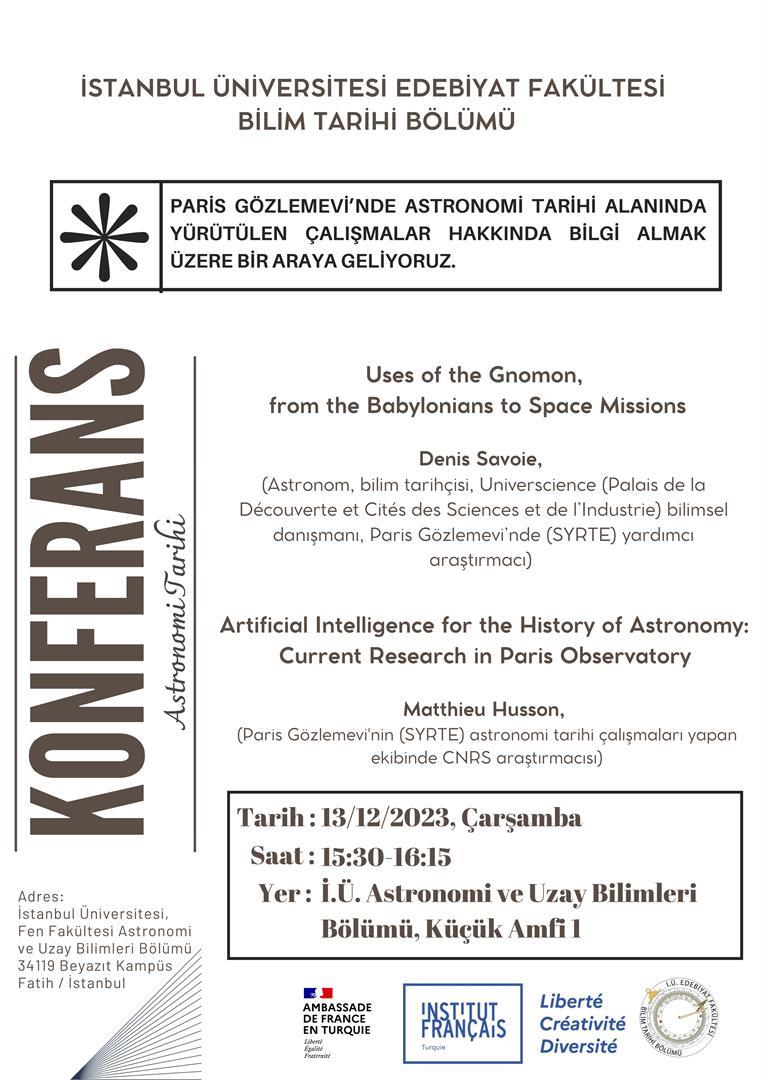
The History of Astronomy Conference, organised by the History of Science Department of our faculty to gather information about the studies carried out in the field of astronomical history at the Paris Observatory, will take place on 13 December 2023 at the Department of Astronomy and Space Sciences of Istanbul University. All those who are interested in the field are welcomed to attend.
The 12th of "Elif Daldeniz Baysan Colloquium on Graduate Studies in Translation Studies", organized by the Department of Translation and Interpreting of or faculty, was held on 7 December 2023.
The program, which took place in the Board Room of the Faculty of Letters, started with the opening speech of Prof. Dr. Arsun Uras, Head of the Department of Translation and Interpreting. Prof. Uras stated that graduate education, especially the doctoral thesis process, provides many benefits to researchers in their academic and professional careers. She also emphasized the contribution of producing original works in the light of scientific research methods to developing a different viewpoint and perspective.
The Vice Dean of the Faculty of Letters, Assoc. Prof. Dr. Aliye Erol, who introduced the colloquium with her opening speech, stated that graduate studies are a unique opportunity to deepen the level of knowledge and specialize; and that it also provides students with the critical thinking, research skills and independence that are required to become pioneers in their fields. Assoc. Prof. Dr. Erol stated that these studies make important contributions not only to the career of the individual but also to the accumulation of knowledge of the society, and drew attention to the fact that graduate studies are not only an individual but also a social responsibility.
The colloquium took place in 4 sessions. Presentations on the theses of 9 young researchers from different universities in Türkiye working at the graduate level were featured. Researchers had the opportunity to open their work for discussion and exchange ideas through presentations on their thesis topics and fields of study. Experienced academics who attended the colloquium as listeners shared their views on the presentations and contributed to the thesis processes of graduate researchers.
Following the 3 sessions of presentations, the 4th session on the topic of "Colloquium on Graduate Studies in Translation Studies from the Perspective of Intra-Academic Communication" discussed the processes and future of the colloquium from the past to the present.
The colloquium was concluded with the closing speech and thanking of the Chairwoman of the Organizing Committee Assoc. Prof. Dr. Yeşim Safiye Tükel Kanra.
The eighth session of the symposium titled "Scientific Accumulation and Production at the Faculty of Letters in the 100th Anniversary of the Republic", chaired by Prof. Dr. Celal Soydan, featured the following presentations Prof. Dr. Abdullah Kızılcık on "Department of Oriental Languages and Literatures"; Prof. Dr. Ali Şükrü Çoruk on "Department of Turkish Language and Literature from the Past to the Present"; Prof. Dr. Hasibe Kalkan on "From the Department of Theatre to the Department of Theatre Criticism and Dramaturgy"; Prof. Dr. Ümit Konya on "Contributions of Istanbul University Faculty of Letters, Department of Information and Document Management to Turkish Librarianship in the Republican Era".
The ninth session of the symposium with the same title, chaired by Prof. Dr. Sedef Çokay Kepçe, featured the following presentations Prof. Dr. Asnu Bilban Yalçın on "Istanbul University Department of Art History in the 100th Anniversary of the Republic"; Prof. Dr. Ufuk Kocabaş on "Keeping the Past Alive: Department of Conservation and Restoration of Cultural Assets"; Prof. Dr. Mehmet Ölmez on "Teaching 'Turkish Dialects' in Türkiye from 1923 to the Present"; Assoc. Prof. Dr. Hasan Ferudun Özgümüş on "Istanbul University Department of Museology from 2009 to the Present" on behalf of Prof. Dr. Fethiye Erbay.
The tenth session of the symposium titled "Doyen Professors of the Faculty of Letters and Their Contributions to the Scientific Development of Türkiye" was chaired by Prof. Dr. Murat Elmalı. In the session the following papers were presented: Prof. Dr. Günay Kut "Teachers, the New Generation will be Your Work"; Prof. Dr. Cengiz Çakmak Teoman Duralı "Man and Philosopher"; İpek Çalışlar "Halide Edib with her Contributions to the Republic"; Prof. Dr. Sedef Çokay Kepçe "A Scientist Beyond His Time: Ord. Prof. Dr. Arif Müfid Mansel".
In the eleventh session of the symposium titled "Scientific Accumulation and Production at the Faculty of Letters in the 100th Anniversary of the Republic" was chaired by Prof. Dr. Esin Ozansoy, the following presentations were delivered: Prof. Dr. Hayati Develi on "The Journey of Linguistics at Istanbul University Faculty of Letters in the First Century of the Republic"; Prof. Dr. Mahmut Karakuş on "From Western Philologies to the Department of Western Languages and Literatures: The 90-Year-Old Department of Western Languages and Literatures in the 100th Anniversary of the Republic"; Prof. Dr. Çiğdem Dürüşken on "The Meaning and Importance of Ancient Languages and Cultures Education"; Prof. Dr. Emine İnanır on "Department of Slavic Languages and Literatures: From the Recent Past to the Future 'With Ideas, With Knowledge'"; Prof. Dr. Arsun Uras on "The Role and Importance of Istanbul University Department of Translation and Interpreting in the Past and Future in Language and Intercultural Communication".
The twelfth session of the symposium titled "Faculty of Letters as a Productive Institution" was chaired by Prof. Dr. Muzaffer Bakırcı. In the session the following papers were presented: Assoc. Prof. Dr. Hüseyin Sarıkaya on "The Establishment of the Institute of Islamic Studies at the Faculty of Letters and its Scientific Activities"; Assoc. Prof. Dr. Müslüm Yılmaz presented on "The Institute of Turkic Studies from Past to Present"; Assoc. Prof. Dr. Metin Ünver on "The Productive Scientist Hrand Andreasyan and His Contributions to Turkish History with His Translations".
We would like to express our gratitude to all our speakers for their valuable contributions and also to all the academic staff and students who honoured us by participating.
"The Faculty of Letters in the 100th Anniversary of the Republic: Symposium on the Contribution of the Faculty of Letters to Türkiye's Intellectual Accumulation" continued on its second day with an immense participation.
In the fourth session of the symposium titled "Scientific Accumulation and Production at the Faculty of Letters in the 100th Year of the Republic" chaired by Prof. Dr. Fadime Suata Alpaslan, featured the following presentations: Prof. Dr. Cengiz Çakmak on "University and Philosophy: Istanbul University Department of Philosophy"; Prof. Dr. İsmail Coşkun on "Department of Sociology"; Prof. Dr. Pınar Ünsal Bayrakçı on "One of Türkiye's Firsts: Istanbul University Department of Psychology"; Prof. Dr. Ecevit Barış Özener on "Istanbul University Department of Anthropology in the Hundred Years of the Republic".
The fifth session of the symposium titled "Doyen Professors of the Faculty of Letters and Their Contributions to the Scientific Development of Türkiye" was chaired by Prof. Dr. Hatice Tören. In the session the following papers were presented: Prof. Dr. Çiğdem Dürüşken on "A Life Between Words: Sina Kabaağaç"; Prof. Dr. Mehmet Samsakçı on "Yahya Kemal's Teaching at Darülfünun during the Armistice Period" and Cafer Vayni on "Erol Güngör in Turkish Intellectual Life".
The sixth session titled "Doyen Professors of the Faculty of Letters and Their Contributions to the Scientific Development of Türkiye", chaired by Prof. Dr. İdris Bostan, started with Prof. Dr. Mücteba İlgürel's paper titled "Ord. Prof. Dr. M. Cavid Baysun". This was followed by Prof. Dr. M. Baha Tanman's paper titled "Prof. Dr. Oktay Aslanapa"; Prof. Dr. Azmi Bilgin's paper titled "Ord. Prof. Fuad Köprülü"; and Prof. Dr. Zeynep Tarım's paper titled "A Pioneering Historian Writing Ottoman History with its Palace, Institutions and Cultural Texture in the Widest Range: İsmail Hakkı Uzunçarşılı".
The seventh session titled "Scientific Accumulation and Production at the Faculty of Letters in the 100th Year of the Republic", chaired by Prof. Dr. Cezmi Eraslan, started with Prof. Dr. Barbaros Gönençgil's paper titled "Istanbul University Geography Department in the 2nd Century of the Republic; Strengths, Opportunities". This was followed by Prof. Dr. Fatih Mehmet Sancaktar's paper titled "Istanbul University Department of History: Future and New Approaches"; Dean Prof. Dr. Sevtap Kadıoğlu's paper titled "The Department of History of Science as the Pioneer of History of Science Undergraduate Education: Experiences and Vision for the Future"; Prof. Dr. Gülsüm Umurtak's paper titled "Department of Archaeology".
We would like to thank all participants and the audience who contributed to the second day of the symposium. We welcome all our academic staff and students to our symposium, which will continue in the Board Room of our Faculty.
"The Faculty of Letters in the 100th Anniversary of the Republic: Symposium on the Contribution of the Faculty of Letters to Türkiye's Intellectual Accumulation" started with an intense participation. The opening speeches of the symposium were delivered by our dean Prof. Dr. Sevtap Kadıoğlu and Istanbul University Vice Rector Prof. Dr. Cemil Kaya.
In the opening session, Prof. Dr. Namık Sinan Turan and Assoc. Prof. Dr. Bilen Işıktaş presented their collaborative paper titled "Three Musicians from the Faculty of Letters Carrying the Memory of Sound from the Ottoman Empire to the Republic: Dürrü Turan, Şerif Muhiddin Targan, Ruşen Ferit Kam". Afterwards, Işıktaş performed selected compositions of the three musicians.
After this session, the opening of the exhibition "From the Faculty of Letters to Türkiye: Those who grew up in the Faculty of Letters" exhibition was unveiled and a cocktail was held at the Hall of Honour. You are welcome to visit our exhibition in the Hall of Honour.
The first session of the symposium titled "Faculty of Letters in the First Years of the Republic" was chaired by Prof. Dr. Mahir Aydın. In the session, the following papers were presented: by Prof. Dr. Lecturer Fatih Tığlı. Prof. Dr. Fatih Tığlı on "Honorary Professorship Granted to Atatürk by the Faculty of Letters on the 100th Anniversary of its Presentation"; Assoc. Prof. Dr. Gülberk Bilecik on "From Zeynep Hanım Mansion to the Faculty of Letters"; Prof. Dr. Hayati Develi on "Lexicography Studies at Istanbul University in the 100th Anniversary".
The second session titled "Foreign Scientists Who Contributed to the Establishment of the Faculty of Letters" started under the chairmanship of Prof. Dr. Mustafa H. Sayar. In the session, the following presentations were featured: Assoc. Prof. Dr. Güler Doğan Averbek on "Mudarris at Istanbul Darülfünun, Expert at Istanbul University Faculty of Letters: Prof. Dr. Osman Reşer (1883-1972)"; Assoc. Prof. Dr. Şebnem Sunar on "Beyond Nation and National: Erich Auerbach's Philological Legacy"; Assoc. Prof. Dr. Aliye Erol on "Clemens Bosch, the Pioneer of Ancient Numismatic Studies in Türkiye"; Prelector Necmi Küçük on "Helmut Ritter, a Tireless Scholar".
The third session titled "Doyen Professors of the Faculty of Letters and Their Contributions to the Scientific Development of Türkiye", chaired by Prof. Dr. İsmet Akova, started with Prof. Dr. Nedret Öztokat Kılıçeri's paper titled "Prof. Dr. Berke Vardar and Linguistics Studies in Türkiye". Afterwards, the following papers were presented: Prof. Dr. İsmail Coşkun on "Baykan Sezer"; Prof. Dr. Yücel Bulut on "Hilmi Ziya Ülken in the History of Turkish Sociology"; Prof. Dr. Cüneyt Kaya on "Fuat Sezgin and the Project of Rewriting the History of Islamic Sciences, the Foundations of Which He Laid at the Faculty of Letters"; and Assoc. Prof. Dr. T. Ahmet Ertek on "Prof. Dr. Sırrı Erinç's Contributions to Geography in the 100th Anniversary of the Republic".
We would like to thank all participants and the audience who contributed to the first day of the symposium. Our symposium will continue tomorrow and Wednesday at the Board Room of our Faculty, we are looking forward to welcoming all our academic staff and students.
The international symposium titled "Türkiye Pakistan Relations" organised by the Department of Urdu Language and Literature in cooperation with Pakistan Yunus Emre Institute, Kaid-i Azam University, Siyalkot University and Bağcılar Municipality was held on 28-29 November 2023. The first day of the symposium was held in Bağcılar Municipality Presidential Conference Hall with the participation of our Dean Prof. Dr. Sevtap Kadıoğlu and our Vice Dean Prof. Dr. Zekai Kardaş. Before the opening, the " Türkiye-Pakistan Relations" themed charcoal painting exhibition prepared by the students of the Faculty of Fine Arts of Pakistan Siyalkot University was presented to the appreciation of the guests. After the national anthems of Türkiye and Pakistan, a documentary on Pakistan was shown.
The opening speeches of the symposium were delivered by the Ambassador of Pakistan to Ankara Dr. Yousaf Junaid, Vice President of Yunus Emre Institute Assoc. Prof. Dr. A. Kutalmış Yalçın, District Governor of Bağcılar Abdullah Uçgun, Dean of Istanbul University Faculty of Letters Prof. Dr. Sevtap Kadıoğlu, Mayor of Pakistan Tehsil Aziz Ullah and Rector of Qaid-i Azam University Prof. Dr. Niaz Ahmad Akhtar, and Member of the Permanent Senate of Pakistan Irfan Siddiqui, who could not attend the symposium, sent a video message to the participants. At the end of the first day, gifts were presented and a photoshoot was held.
The sessions on the second day of the symposium were held in the Doctoral Hall of Istanbul University Rectorate Building. The charcoal drawing exhibition on " Türkiye-Pakistan Relations" prepared by the students of the Faculty of Fine Arts of Pakistan Siyalkot University was also presented to the appreciation of the guests. At the end of the symposium, Participation Certificates were presented to the participants.
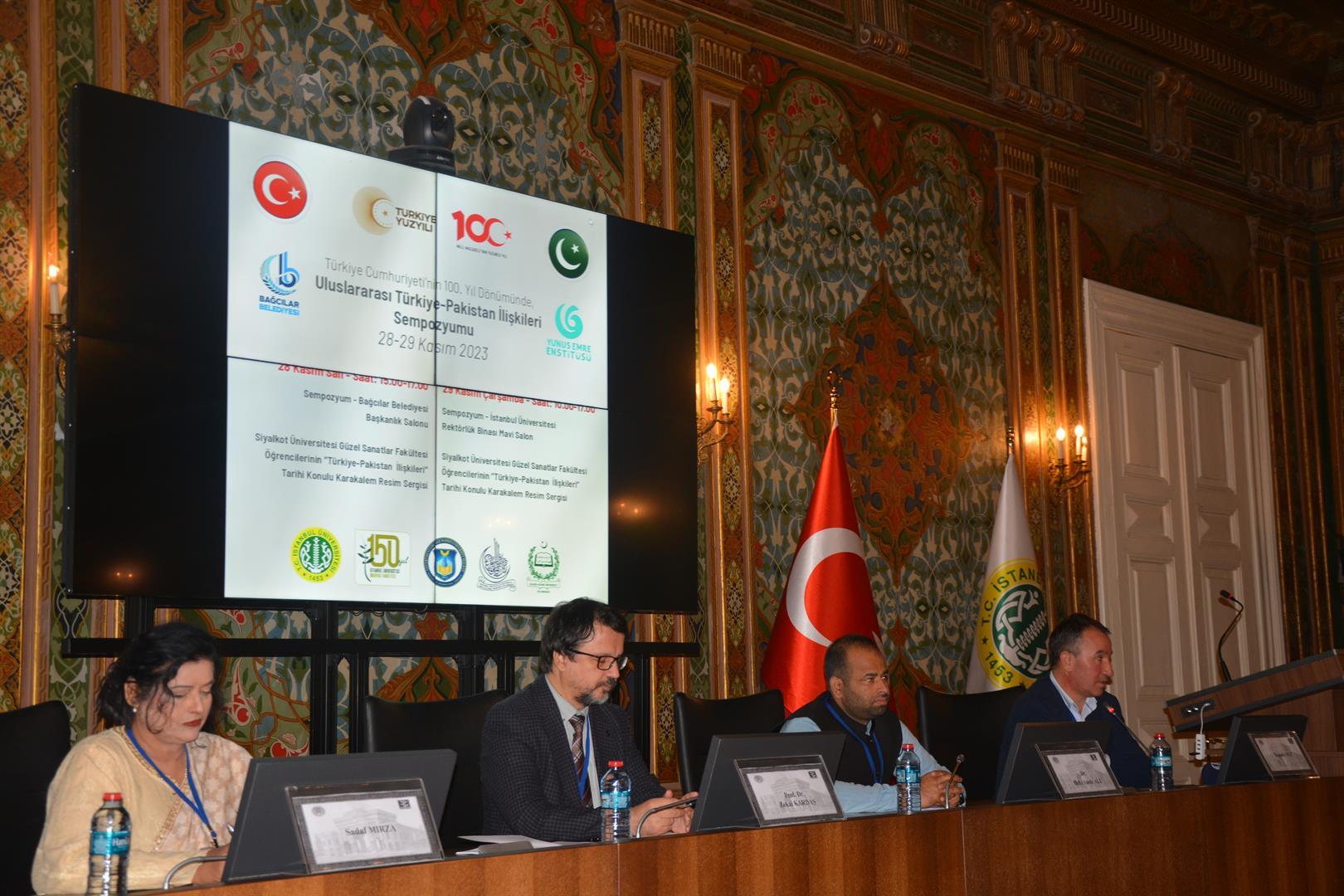
The first Academic General Assembly Meeting of the 2023-2024 academic year was held with the participation of our Dean Prof. Dr. Sevtap Kadıoğlu, Vice Deans Prof. Dr. Zekai Kardaş, Assoc. Prof. Dr. Aliye Erol and all faculty members. We are hoping that the decisions taken will be beneficial for our faculty.
CONGIST’26
Interdisciplinary Perspectives on Crisis
Date: 13-15 May 2026
Venue: Istanbul University, Faculty of Letters, Istanbul, Turkey
In the context of social sciences, crisis is broadly defined as a period of severe disruption or instability that challenges established structures, norms, or systems within societies. Crises can manifest in various forms—economic collapses, political upheavals, environmental disasters, technological shifts, wars, pandemics, climate or cultural conflicts. Historically, crises have always triggered societal change, which necessitate adaptation, reorganization, and innovation within communities. Throughout history, the impact of crises has been profound, shaping the trajectories of societies by prompting adaptation and transformation. Societies that fail to address crises effectively often face decline, while those that develop robust strategies can recover and evolve. Understanding crises within an interdisciplinary framework helps to reveal patterns, inform policies, and foster resilience in the face of contemporary and future challenges.
This international congress aims to explore the dynamics of crises from interdisciplinary perspectives. Potential themes for papers and panels include, but are not limited to:
- Cultural Crises and Sustainability
- Representations of Crises and Sustainability in Media, Cinema, and Art
- The Crisis of Art Criticism
- Aesthetic Reflections of the Crisis
- Crisis in Performing Arts
- Crisis, Sustainability, and Misinformation
- Social Crises and Transformation: Sociological and Psychological Approaches
- Information and Records Management in Times of Crisis: Digitalization, Archiving, and Sustainability
- Eco-Communication in Crises
- Crisis and Ethics
- War, Crisis, and Sustainability: The Impact of Conflict on Societal Continuity
- Sustainability and Resilience in Historical and Archaeological Perspectives
- Utopian and Dystopian Visions of Crisis and Sustainability
- Geographical Approaches to Environmental Crises and Sustainable Solutions
- Philosophical Reflections on the Relationship Between Crisis and Sustainability
- Crises and Sustainability in the Ancient World
- Anthropological Perspectives on the Social and Cultural Impact of Crises
- The Language of Crisis: Linguistic Perspectives
- Eco-Linguistics and Sustainability
- The Role of Discourse in Shaping Collective Action about Crisis and Sustainability
- Discourse(s) of Crisis
- Semiotics of Crisis
- Multimodal Communication in Crisis Situations: Ecolinguistic and Ecosemiotic Perspectives
- Ecocriticism, Ecofeminism, and the Climate Crisis: Literary Representations of Sustainability
- Apocalyptic and Post-Apocalyptic Fiction: Crisis, Survival, and Sustainable Futures
- Literary Depictions of Resource Scarcity and Environmental Collapse
- The Evolution of Crisis-Related Vocabulary: Historical and Contemporary Linguistic Trends
- Narratives of Crisis and Sustainability: Literary Responses to Environmental and Social Challenges
- Historical Perspectives on Crisis and Recovery
- The Psychological Impacts of Crises
- Eco-translation and Climate Crisis
- Disaster and Crisis Interpreting
- Crisis in Logic
- Episteme and Crisis
- Phenomenology of Crisis
- Postmodernity and Crisis
- Ontology and Crisis
- Identity construction and Crisis
- Language and Signs of Crisis
- The Role of Globalisation in Triggering and Resolving Crises
- Local Effects of Global Crises
- Preparation for Future Crises in the Light of Historical Analyses
- Sustainable Development and Crisis Prevention Policies
- Income Inequality, Class Conflicts and Crises
- The Search For Social Justice and Crisis Management
- Wars, Famines, And Waves of Migration
- The Effects of Refugee Crises on International Politics
- Geographical Dimensions of the Climate Crisis
- Natural Disasters and Social Vulnerability
- Resource Crises and Geopolitical Tensions
- Urbanization and Ecological Crisis
- Digital Crises and Social Interaction
- Social Impacts of Crises
- Post-Crisis Psychological Transformation,
- Resilience, and Adaptation Processes
- Psychological Impacts of Crises
Congress Languages: English and Turkish
PUBLICATION OPPORTUNITIES
ABSTRACTS
Abstracts of the papers presented at the conference will be published in the book of abstracts with ISBN.
FULL TEXTS
Option 1: Selected papers presented at the congress will be considered for publication in peer-reviewed edited volumes of the Congist Book Series by IU-Press. IU-Press is indexed in the Web of Science Book Citation Index (BKCI).
Option 2: Selected papers presented at the congress will be considered for publication in special issues of international peer-reviewed journals published by IU-Press, which are indexed in the Web of Science Emerging Sources Citation Index (ESCI) and Elsevier Scopus.
Submission of the Abstracts: Please submit your paper proposals (max. 1 DIN-A-Size, Times New Roman 12 point type, 2000 characters including spaces) online at from here.